
Between the Surveys: Tracking Living Conditions in Forced Displacement with Satellite Data
_______________________________________________________________________________________________________
Commitment: Innovation to increase the quality, timeliness, and accessibility of socioeconomic data on forced displacement
Organization(s): World Bank–UNHCR Joint Data Center on Forced Displacement (JDC)
Authors: Patrick Brock, Steven Ndung'u, Ismael Yacoubou Djima
Publication Date: 21 October 2026
________________________________________________________________________________________________________
Forced Displacement Data Gaps
Forced displacement is a humanitarian and a long-term development challenge. Many displaced people live in protracted situations in low- and middle-income countries, sometimes for years or decades.
Tracking how their situation changes over time depends on surveys that include forcibly displaced people and host communities, which provide the most detailed evidence on their living conditions and welfare. But these surveys are costly, and rounds are often several years apart. In fragile and conflict-affected settings, conditions can change quickly, leaving governments and humanitarian and development partners without the up-to-date evidence they need to prioritize resources and respond as needs change. The JDC’s Commitment to Data aims to help close this gap through innovation.
Satellite and Survey Data
Satellite imagery is changing how living conditions are measured where data are scarce. Used alongside household surveys, it can provide regular estimates of poverty and wealth across large areas. Until now, however, this approach has been developed mainly for general populations rather than for refugees and the communities hosting them. SocioSAT, a UNHCR-led project supported by the JDC, is testing whether combining satellite imagery with household surveys of refugees and host communities can track how their living conditions change from one round to the next.
Adapting the Model
SocioSAT started with an existing tool that estimates poverty and wealth from satellite images. It was built using surveys of about 1.2 million households in 36 African countries, covering the general population. When the team first applied it to displacement settings, the results were unreliable, because living conditions in and around camps can be very different. The team retrained the tool using surveys of refugees and host communities in South Sudan, Cameroon and Zambia, and in tests it performed well, particularly in and around camps. The findings are set out in a paper co-authored with World Bank researchers.
Between Survey Rounds
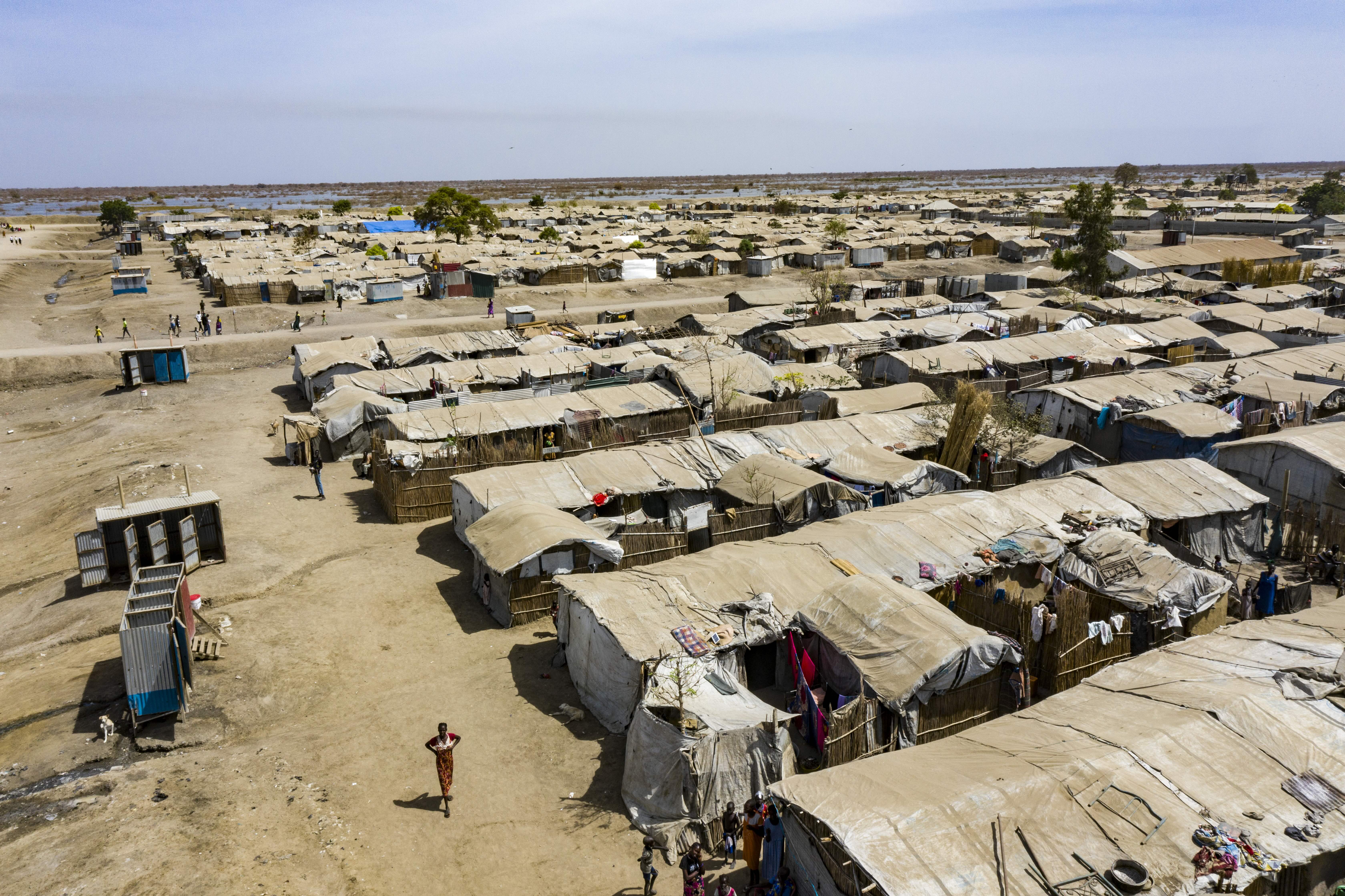
In South Sudan, the tool was then used to look beyond the most recent survey, UNHCR’s 2023 Forced Displacement Survey, and provide estimates for 2024 and 2025, when no survey took place. These estimates point to living conditions falling by more than 10 per cent in the first year and by more than a quarter by 2025. The decline was seen in camps and in host communities, during a period of new arrivals from Sudan, rising violence, inflation and flooding.
What We Have Learned
The work offers two important lessons for other organizations working in this field. Tools developed for the general population cannot simply be transferred to displacement settings. They need to be adapted using data collected from displaced people and host communities, which makes surveys that include these groups essential. Estimates for the years between surveys are also a guide to where conditions may be changing rather than a direct measurement. They are most useful when used alongside survey findings and checks on the ground.
What’s Next?
The team will compare the estimates with new survey data as it becomes available, including South Sudan’s National Household Budget Survey, and with food-security data from the World Food Programme. The aim is to update the estimates once or twice a year and share them through maps and briefs, so that host governments and partners can see where conditions may be changing. As more survey data on displaced people become available, the approach could be extended beyond Sub-Saharan Africa.
Why It Matters
Success would mean that host governments and their partners have regular, up-to-date evidence on how living conditions are changing in displacement settings, rather than a snapshot every few years. They could then see where conditions appear to be getting worse, direct resources there, and decide where new surveys are most needed. For refugees and host communities, this means assistance that responds more quickly when their situation deteriorates. Household surveys remain the benchmark, but satellite estimates extend their value from one round to the next.
Progress on the commitment is tracked against three targets for 2027: new tools developed, tools and methods used in different displacement settings, and research and guidance notes published.
Links
Paper: Transfer Learning for Socioeconomic Estimation in Forced-Displacement Settings: https://arxiv.org/pdf/2609.15773
SocioSAT project page (UNHCR): https://www.unhcr.org/us/project-transfer-learning-socioeconomic-data-sociosat
_________________________________________________________________
Image caption and credit: IDP camp in Bentiu. © UNHCR/Andrew McConnell